Jonas Schmitz · 23 September 2026
Volunteer Networks Restoring Forgotten Country Estates Through Hands-On Partnerships
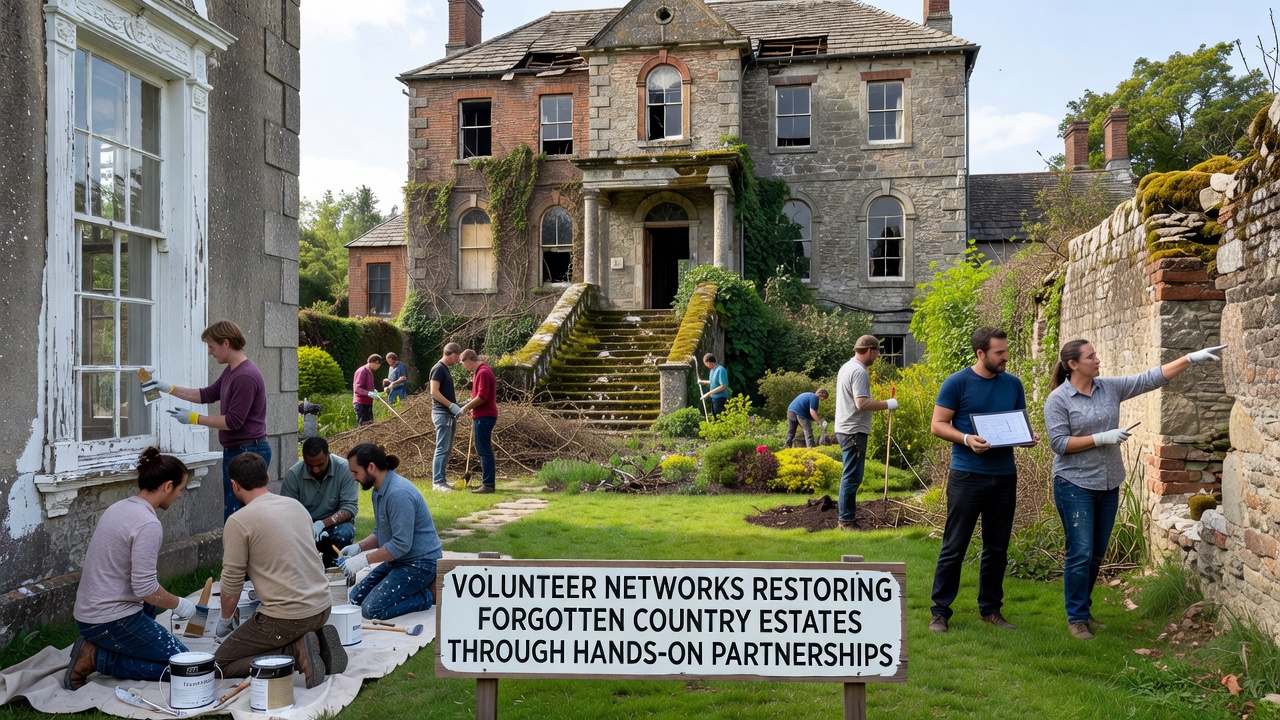
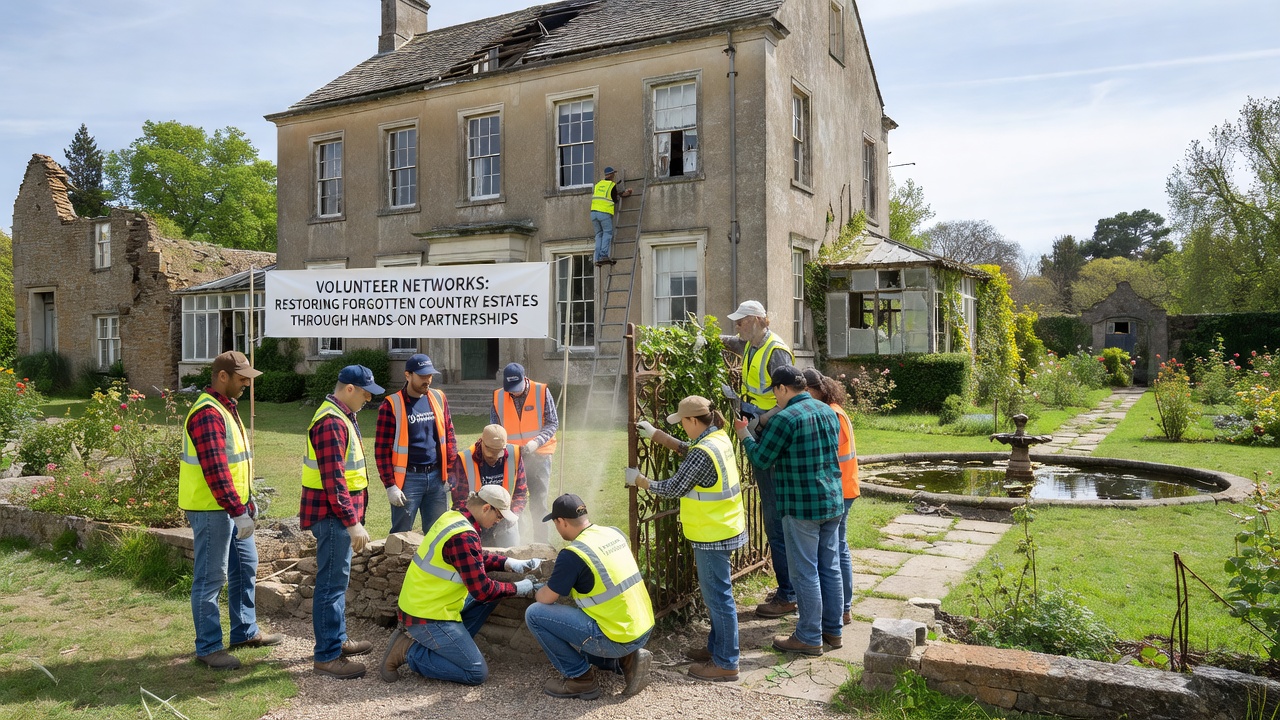
Volunteer networks have expanded their role in heritage preservation by forming structured partnerships with estate owners, local authorities, and specialized training programs, allowing participants to undertake direct restoration tasks on neglected country properties across multiple regions. These arrangements typically involve coordinated work sessions where individuals contribute labor to tasks such as roof repairs, garden reclamation, and structural stabilization, while organizations supply materials and oversight.
Partnership models often begin with site assessments conducted jointly by volunteers and conservation experts, after which phased projects are outlined to address both immediate safety concerns and longer-term preservation needs. Data from regional heritage inventories show that such collaborations have documented over 200 estates in varying states of disrepair since the early 2020s, with volunteer contributions accounting for measurable reductions in restoration timelines on several documented properties.
Partnership Structures and Operational Models
Organizations coordinate through formal agreements that define liability coverage, skill-matching protocols, and progress reporting requirements, ensuring that volunteer efforts align with regulatory standards for historic structures. One established framework pairs estate custodians with regional volunteer registries, enabling recurring weekend or week-long work camps that focus on specific trades like timber framing or lime rendering.
Training components integrated into these partnerships include certification courses in traditional building techniques, delivered in collaboration with technical colleges and craft guilds. Participants who complete these modules gain credentials that allow them to lead subgroups on subsequent projects, creating a layered structure of responsibility that sustains momentum across multiple estates.
Geographic Distribution and Project Examples
Activity concentrates in rural districts where large estates have passed through generations without sufficient maintenance funding, yet similar initiatives operate in North America and parts of continental Europe. In one documented case, a volunteer cohort restored the walled kitchen garden of a 19th-century property in the American Midwest, replanting heirloom varieties according to original layouts preserved in archival drawings.
European examples illustrate parallel developments, with networks in France and Germany linking urban professionals seeking weekend engagement with rural chateaux requiring seasonal upkeep. These cross-border exchanges have produced shared databases of techniques and material suppliers, reducing duplication of effort on comparable architectural features.
September 2026 marks the scheduled launch of an expanded registry system designed to connect volunteers with estates in underrepresented counties, building on pilot data collected over the preceding two years. Project coordinators anticipate that the updated platform will facilitate real-time matching based on available skills and site requirements.
Resource Allocation and Funding Mechanisms
Many networks operate on hybrid funding that combines small grants from heritage foundations with in-kind donations of tools and transport from corporate partners. Financial tracking reported by participating estates indicates that volunteer labor offsets between 30 and 45 percent of typical contractor costs on mid-scale restoration phases, though material expenses remain the primary budget item.
According to figures released by the National Trust for Historic Preservation, estates engaged in volunteer partnership programs demonstrate higher rates of completed work phases compared with those relying solely on professional crews, primarily because sustained volunteer presence maintains site momentum between funded stages.
Skill Development and Long-Term Outcomes
Longitudinal observations compiled by academic researchers track how repeated participation builds specialized competencies among volunteers, some of whom transition into paid roles within the heritage sector. Estate records further show that properties maintained through ongoing volunteer agreements experience fewer emergency interventions once initial restoration thresholds are passed.
Monitoring protocols established under these partnerships require quarterly condition reports submitted to oversight bodies, generating datasets that inform broader policy discussions on rural heritage management. European partners reference similar patterns documented through the European Heritage Alliance, where coordinated volunteer input has supported the stabilization of comparable estates facing parallel funding constraints.
Conclusion
Volunteer networks continue to refine their partnership approaches by incorporating feedback loops from completed projects and expanding training offerings to match emerging conservation challenges. The resulting body of practical experience provides a replicable template for additional estates seeking structured assistance, while the accumulated records contribute to wider understanding of effective preservation strategies in rural settings.